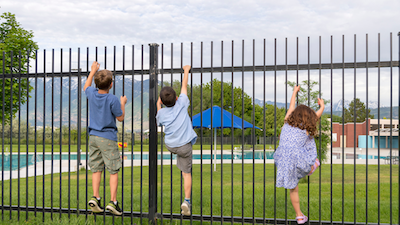
For a lot of Georgia families, a backyard pool is the reward at the end of a long homebuilding or renovation process. It’s where summer actually happens: cookouts, cannonballs, kids counting down the days until school lets out. But before the water even goes in, there’s one decision that matters more than tile color or deck material: how you’re going to keep people, especially small children, safe around it.
Pool fencing isn’t a formality. It’s the single most effective tool families have for preventing the kind of accident nobody thinks will happen to them.
The Risk Is Real, and It’s Quieter Than You’d Expect
According to the CDC, drowning is a leading cause of unintentional death for children ages 1 to 4, and most of those drownings happen in home swimming pools. What makes pool drownings so hard to prevent isn’t a lack of concern from parents; it’s how fast and how quietly they happen. A child can slip away from a backyard gathering, a phone call, or a moment of distraction and be in trouble within seconds, often without a splash or a sound loud enough to draw attention.
That’s why “someone was watching” isn’t a safety plan on its own. Supervision matters, but it isn’t constant, and it only takes one gap for something to go wrong.
Why a Fence Works When Supervision Isn’t Enough
Pool fencing works because it doesn’t rely on anyone remembering to pay attention at the right moment. A four-sided isolation fence, one that separates the pool area from both the house and the yard, creates a barrier a young child has to actively get through, not just wander past. Research on residential pool drownings has found that four-sided fencing can reduce a child’s risk of drowning by as much as 83% compared to a pool with no fence or only a three-sided property-line fence that leaves the house side open.
That gap matters. A lot of families assume the fence around their yard is enough. It isn’t, at least not on its own. If the door from the house opens straight onto the pool deck with nothing in between, a child can walk directly from the living room to the water. An isolation fence closes that gap.
What Georgia Actually Requires
Georgia adopted new statewide pool barrier requirements as part of the 2024 International Swimming Pool and Spa Code, effective January 1, 2026. At a minimum, a compliant pool fence needs to be:
- At least 48 inches tall, measured from the ground to the top of the barrier
- Free of any opening larger than 4 inches, including the gap at the bottom, so a small child can’t squeeze through or slip underneath
- Equipped with a gate that’s self-closing and self-latching, and that swings away from the pool, not toward it
- Fitted with a latch release set high enough (generally at least 54 inches) that a young child can’t reach it
Some counties and cities enforce stricter rules on top of the state minimum, and most jurisdictions require a permit and inspection before you’re allowed to fill the pool. It’s worth confirming your local requirements early in the process, not after the fence is already up.
Choosing a Fence That’s Actually Livable
Code compliance is the floor, not the whole picture. The fence also has to work for how your family actually uses the yard, which means visibility matters almost as much as the barrier itself. A solid privacy fence around a pool can technically meet code while making it harder to keep an eye on the water from inside the house or across the yard.
That’s part of why aluminum has become the go-to material for pool enclosures. Its open picket style keeps the pool visible from just about any angle, so a parent, grandparent, or lifeguard can glance over and actually see what’s happening. It also holds up well to constant humidity and pool chemicals without rusting, which matters for a fence that’s going to be within a few feet of chlorinated water for years.
One Layer of Several
No single safeguard eliminates risk entirely, and pool fencing works best as one layer in a broader safety plan that includes swim lessons, close supervision during pool time, and door or gate alarms for extra peace of mind. But among those layers, an isolation fence is the one that keeps working even when everything else fails, when supervision slips, when a door gets left open, when a child is faster or more curious than anyone expected.
If you’re planning a new pool, building the fence into your timeline from the start, rather than treating it as an afterthought, saves you a permitting headache later and, more importantly, means your pool is protected from day one.
Select Fence Group designs and installs code-compliant pool fencing throughout Northeast Georgia, with self-latching gates and sightline-friendly materials built around keeping your family safe. Contact us to talk through your pool project before the water goes in.