Most people plan the fence first and pick the gate at the end. You open and close the gate every day, though, and a gate that’s too narrow, hung on the wrong post, or paired with the wrong opener will wear out long before the fence does.
At Select Fence Group, we install and repair gates for homes, businesses, farms, and job sites across Northeast Georgia. This guide covers the choices we go over with customers: swing or slide, which material, whether to automate it, and which codes apply before the first post hole is dug.
Start With How the Gate Will Be Used
Before you think about style or color, answer a few practical questions:
- What goes through it? People, cars, delivery trucks, tractors, or livestock all need different widths and hardware.
- How often does it open? A backyard walk gate gets light use. A business entrance might open all day long.
- Who needs in when you aren’t there? Think employees after hours, delivery drivers, and emergency crews.
- What’s the ground like? Slopes, soft soil, and drainage all affect how a gate must be hung.
Your answers decide the gate’s size, the hardware it needs, and whether a manual gate makes sense at all.
Swing Gates vs. Slide Gates
| Gate type | Works best for | What it needs |
| Single swing | Walkways, backyards, pool areas | Clear room for the gate to swing open |
| Double swing | Driveways, farm entrances, wider openings | A fairly level arc for both leaves |
| Slide or cantilever | Commercial entrances, wide openings, sloped or tight sites | Room along the fence line for the gate to roll back |
Swing gates are simpler and cost less in most cases. They look great on a driveway, but they need open space in front of them. On a slope, a swing gate can drag or hit the ground unless it’s planned to swing the right direction.
Slide gates travel along the fence line rather than swinging outward. That makes them a good fit for wide commercial entrances and sites where there’s no room for a gate to swing, such as a driveway that opens directly onto a parking area.
Choosing a Gate Material
In most cases, your gate should match your fence:
- Wood gates pair with wood privacy fences around homes. A solid frame and good hinges keep a wood gate from sagging over time. Our post on why wood fences remain a top choice covers the material in more detail.
- Aluminum gates are common at pools, in front yards, and in HOA neighborhoods because aluminum doesn’t rust. Read what you need to know before installing aluminum fencing, or see our aluminum fence options.
- Steel gates handle heavy daily use and security needs at businesses, schools, and campuses. We explain why steel fencing is the best choice for commercial properties in 5 reasons, and you can see styles on our steel fence page.
- Chain-link gates are a practical choice for job sites, equipment yards, sports fields, and back-of-house areas. See our chain-link fence page for more.
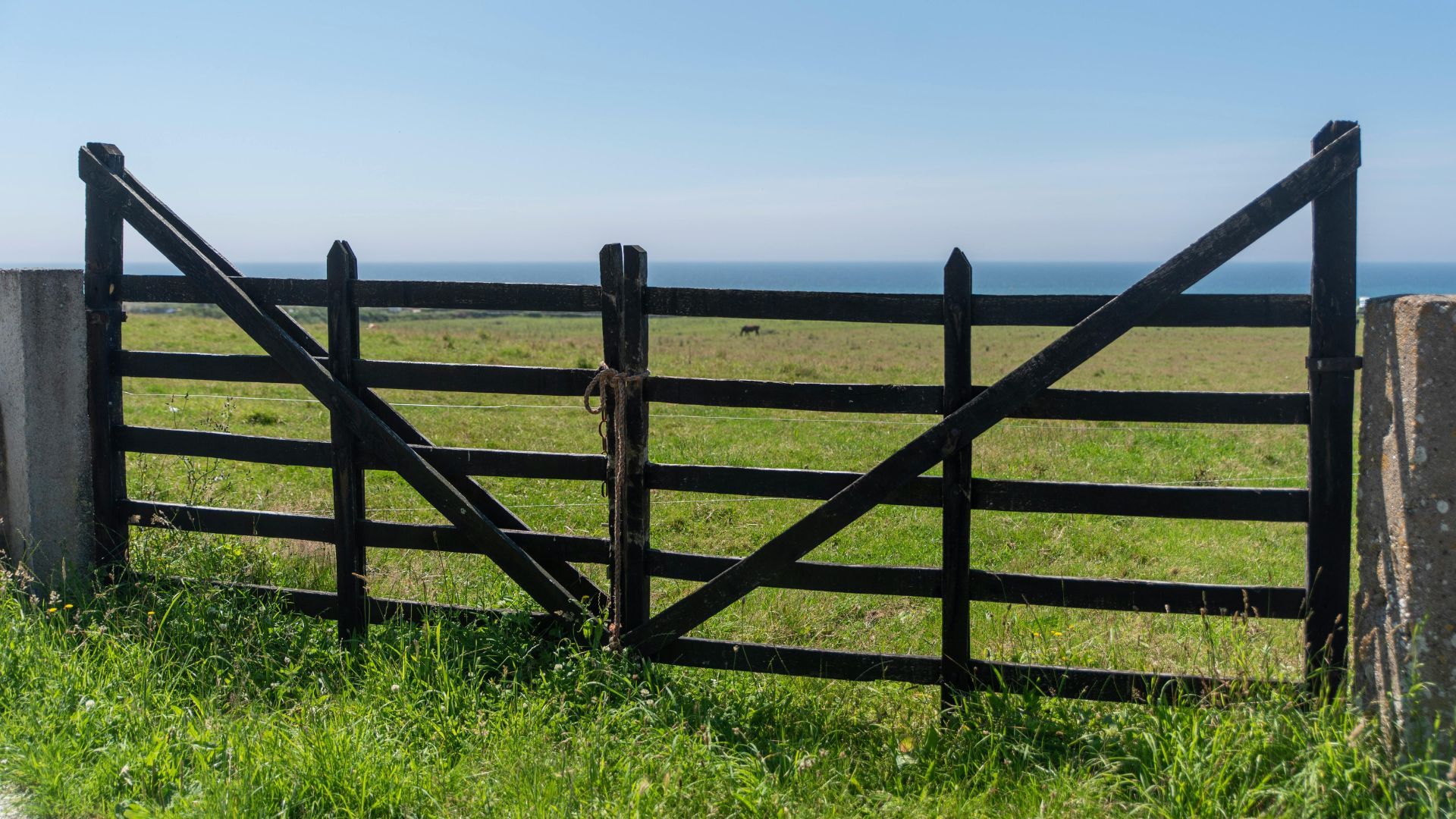
- Farm gates provide access to fenced-in pastures and fields for livestock and equipment.
Should You Automate Your Gate?
An automatic gate opener makes sense when the gate opens many times a day, when people need to get in without someone having to walk out to open it, or when a business needs to control who comes and goes. Keypads, remotes, and card readers are common ways to open them. We recommend an operator based on the gate’s size, weight, and how much it’ll be used.
An automatic gate moves a lot of weight with nobody pushing it, so two national safety standards cover it. UL 325 covers the gate operator and its safety devices. ASTM F2200 covers how the gate itself is built and installed. Examples include screening openings so a hand can’t reach through, guarding the rollers on slide gates, and leaving enough clearance between a swing gate and nearby walls or posts. DASMA has a good installer’s overview of ASTM F2200 if you’re looking for more details.
We also suggest adding a separate walk gate next to any automatic vehicle gate. That way, people on foot never have to walk through the path of a moving gate.
Gates at Businesses: Fire Access and Accessibility
Commercial gates carry a few extra rules. Plan for them before we build the gate, and you avoid paying to retrofit it later.
Fire department access. If a gate crosses a road that fire trucks would use to reach a building, the International Fire Code (section 503.6) requires approval from the fire code official and an approved method for opening it in an emergency. Electric gate operators also need to be listed to UL 325, and automatic gates have to meet ASTM F2200. Georgia’s state fire safety rules are based on the International Fire Code. In Athens-Clarke County, the Fire Marshal’s Office is the place to start. Ask your local fire marshal early, because they decide things like the minimum opening width and which key switch or lock box the fire department requires.
Accessibility. A walk gate on an accessible route has to meet the 2010 ADA Standards for doors, doorways, and gates (section 404). In practice, that means at least 32 inches of clear width and hardware that people can use without tight grasping or twisting.
If you’re a builder or general contractor planning a new commercial site, our commercial fencing team can help you lay out gates and access points alongside the rest of the perimeter.
Pool Gates
A gate someone leaves open or unlatched defeats the whole pool fence, so the gate needs the most attention. The U.S. Consumer Product Safety Commission’s Safety Barrier Guidelines for Pools say pedestrian pool gates should:
- open outward, away from the pool
- close on their own and latch on their own
- have the latch release on the pool side, at least 3 inches below the top of the gate, if the release sits less than 54 inches from the bottom of the gate
- have no opening larger than 1/2 inch within 18 inches of that latch release, so a child can’t reach through and open it
Local code may add more requirements. Learn more with our post on code-compliant pool fencing and our pool fencing hub.
Farm Gates
A farm gate needs to let your equipment and animals through and keep the livestock in the rest of the time. Size the opening for the largest piece of equipment you actually run through it, and make sure the gate hangs level and latches every time. A gate that sags or drags tends to get left open. If you’re fencing pasture, our guide to farm fencing in Social Circle, GA covers what rural property owners should plan for.
Before the Posts Go In
A few steps keep a gate project on schedule:
- Get a survey. We require a property survey before building any fence. Read why we ask for one.
- Check permits. Your fence permit covers the gate in most places, and your site plan should show where each gate goes. Our guides to permits in Athens-Clarke County and Conyers walk through the process.
- Call 811 before you dig. Georgia law requires notifying Georgia 811 at least two business days before digging so that underground utilities can be marked.
- Plan power early. An automatic gate needs electricity at the opener. Run conduit before the driveway is paved or the landscaping goes in.
When a Gate Needs Repair
Gates take more wear than any other part of a fence. If yours is sagging, dragging, not latching, or the opener isn’t working right, we can repair it. Not sure whether to fix it or start over? Read how to know when it’s time to repair or replace your fence, or see our fence repair services.
Gate Installation FAQs
How long does gate installation take?
We install most standard residential and commercial gates within a few days. Custom gates and larger driveway gates can take longer.
Can you add a gate to my existing fence?
Yes. We install new gates on existing fences and can match the material and style to what’s already there.
Do you install automatic gate openers?
Yes. We install and program automatic gate operators for homes and businesses across Northeast Georgia.
Do I need a permit for a gate?
In most cases, your fence permit covers the gate, but rules vary by city and county. Commercial gates across fire access roads also need fire marshal approval.
Get a Free Gate Consultation
Select Fence Group installs wood, aluminum, steel, chain link, and farm gates across Northeast Georgia. We’ll visit your property, recommend the right gate, and give you a clear estimate. Request a free quote or call 678-201-6548.